Back to 3D Printing: From Anycubic 4MAX to Ender 3 Pro
Returning to 3D printing with an Ender 3 Pro, from endless toolhead upgrades to printing useful things at home.
In February 2021, I wrote My first steps in 3D printing, where I talked about my first 3D printer, the Anycubic 4MAX, its upgrades, and how I eventually ended up disappointed with the results of those modifications.
Unfortunately, my Anycubic 4MAX is still gathering dust somewhere in Russia. In Belgrade, I returned to 3D printing with a Creality Ender 3 Pro—a printer I'd had my eye on for quite a while and had even considered buying as a second printer.
From OctoPrint to Klipper
Back in Russia, I bought a Raspberry Pi 3B and used it to run OctoPrint with the Anycubic 4MAX. I wanted to start prints remotely and have a web interface for it.
I brought the Raspberry Pi with me from Russia, and it came in very handy in Belgrade.
Almost immediately after buying the Ender 3 Pro, I connected the Raspberry Pi to its stock motherboard and installed Klipper.
Later, I replaced the stock motherboard with an SKR Mini E3 V3.0.
It's a kind of drop-in replacement: you can install it in place of the original board without modifying the electronics enclosure.
What I mainly wanted from the new board was quieter stepper drivers and the ability to control the hotend cooling fan, so it wouldn't have to run all the time.
Endless Toolhead Upgrades
Unlike my previous experience, I started paying more attention to ready-made solutions that could be installed with minimal modifications. But I didn't arrive at that approach straight away.
There are countless mods available for the Ender 3, and I decided to take advantage of them. At first, I tried upgrading the cooling system with the Hero Me project. Buying a Sprite Pro seemed expensive and unnecessary at the time: I could build Hero Me from printed parts and essentially repackage the existing extruder.
But I ran into problems.
That combination of hotend and filament feeder required a Bowden tube between the hotend heatsink and the feeder. And that tube caused an enormous amount of trouble later on.
I just couldn't put the toolhead together properly, and I wasn't particularly happy with the design itself. I spent a very long time tinkering with it but never managed to get a result I was satisfied with.
I decided this part of the setup needed to be simpler, and even bought a BMG extruder to replace the Ender 3 Pro's stock feeder.
But that didn't help either.
Then I thought I'd probably use the BMG together with an E3D V6 hotend. That would have required a lot more modifications, though, and by then my toolhead was already in pieces.
At some point, I decided it would be better to buy a Sprite Pro, install it, and just start printing instead of endlessly rebuilding the toolhead.
The kit included the extruder itself, a carriage compatible with the Ender 3 Pro, a cable, and the other necessary parts. That meant I could keep additional modifications to a minimum and get back to printing as soon as possible.
Sprite Pro and Finding a Stable Setup
Of course, I still couldn't give up modifications completely.
Even for the Sprite Pro, I found a way to modify the mounting plate and cooling system to use 5015 fans. The stock fans didn't seem powerful enough to me.
But this time I kept in mind that I didn't have a spare extruder, so I needed to be very careful with modifications.
That process was also somewhat painful and took quite a bit of time. Still, after several iterations, I finally arrived at a reasonably stable setup that I'm happy with.
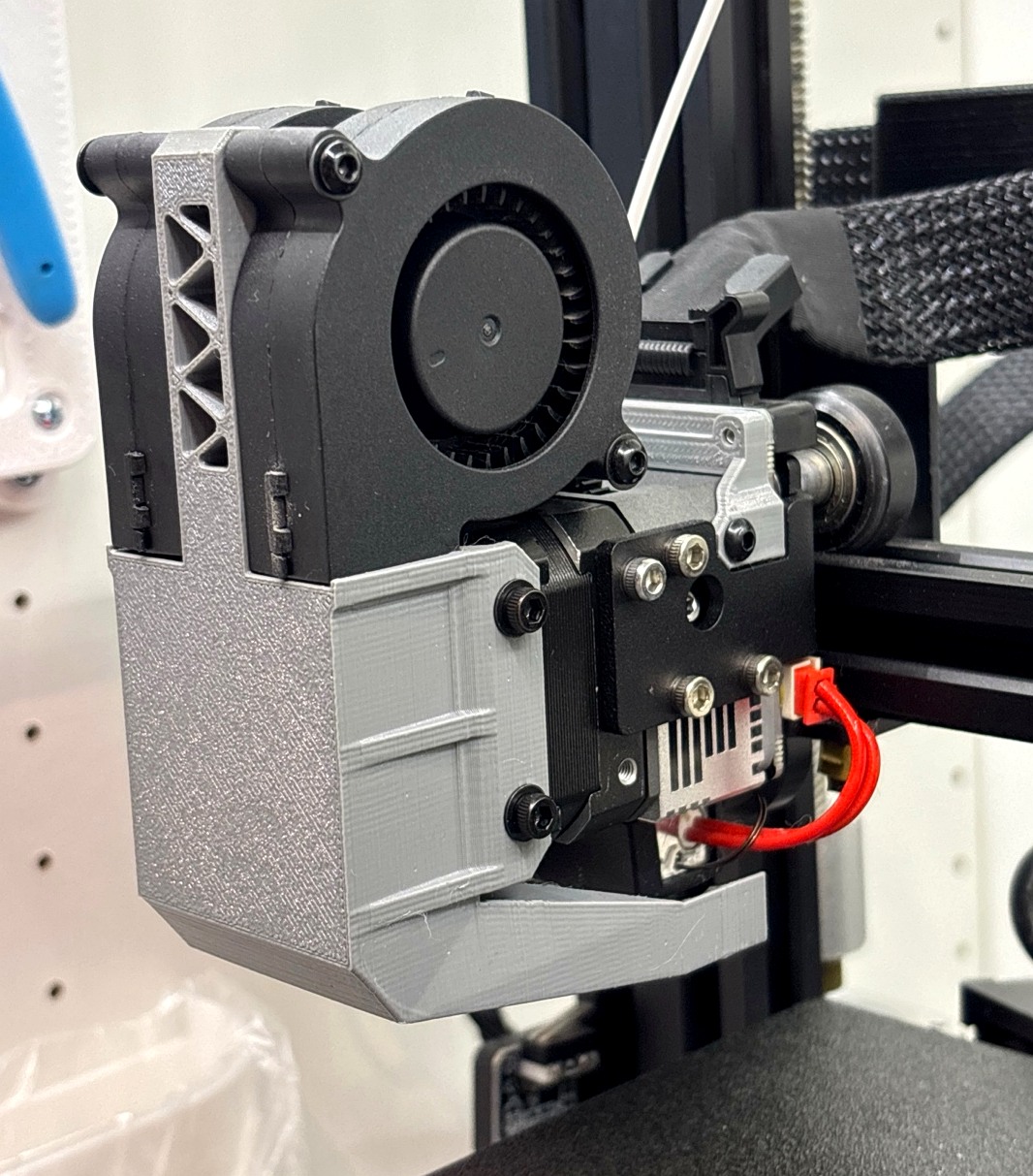
Sprite Pro with my modified cooling setup.
A Printer as a Tool for the Home
In the end, I decided to use this printer exclusively for PLA and PETG.
What I mainly want from it is the ability to print things and parts for the home that make everyday life a little better.
As it turns out, when you can design something yourself or find a suitable model on a dedicated website, a 3D printer becomes a very handy tool.
Being able to make a small part for exactly the task you have in mind can really improve everyday life.
Volkswagen Golf — Just for Fun
One of those models is a little Volkswagen Golf.
When I found this Volkswagen Golf GTI Mk1 model on Printables, I immediately fell for it. I printed it simply because I wanted something nice to look at.
Not everything you print has to serve a practical purpose.
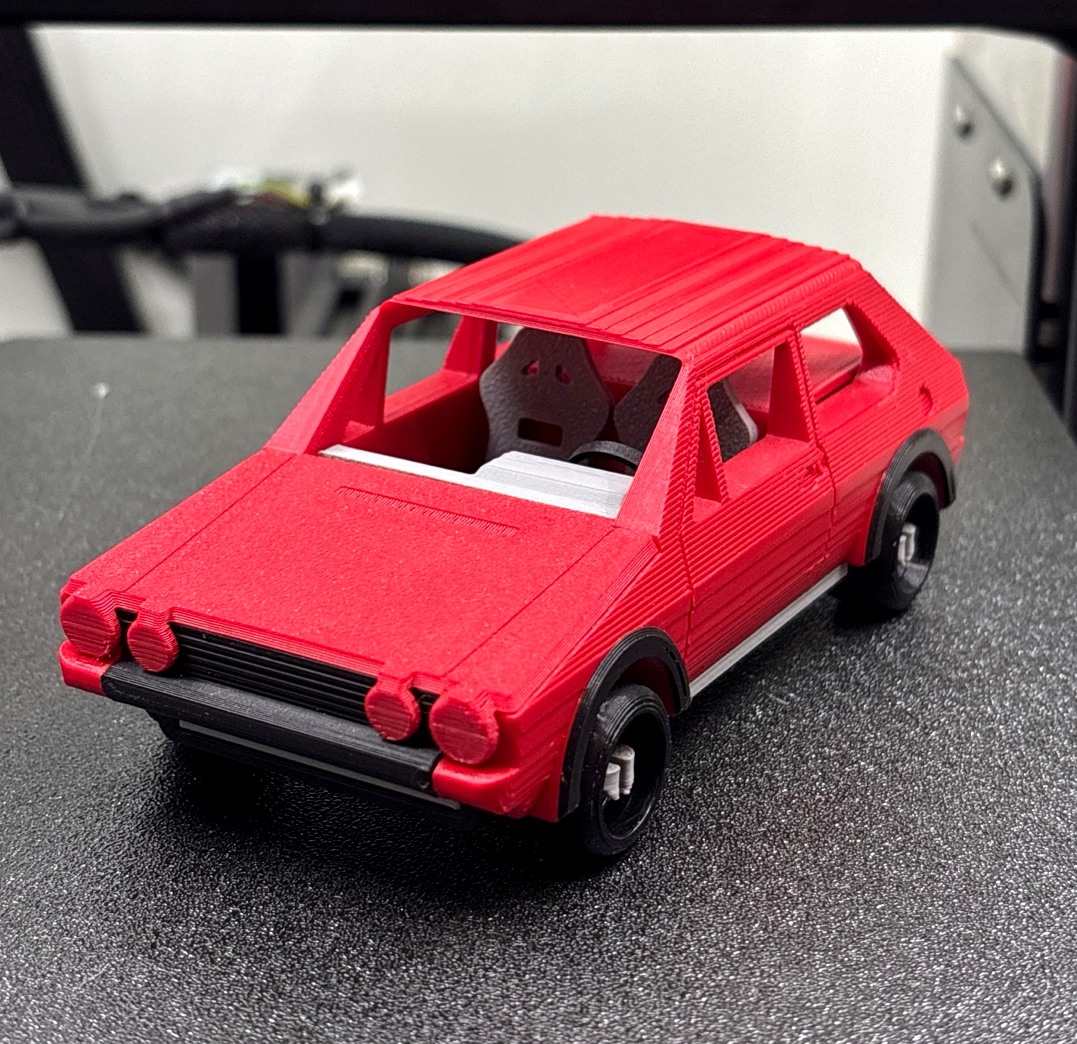
The little Volkswagen Golf GTI Mk1 I printed just for fun.
A Funnel for the Dishwasher
Another example is a funnel for pouring salt into the dishwasher.
The dishwasher didn't come with a funnel. Going to a shop or buying one separately seemed unnecessary.
I simply found a suitable model online and printed it quickly.
Now, every time I refill the dishwasher salt, the funnel does its job: the salt doesn't spill, and I'm happy.
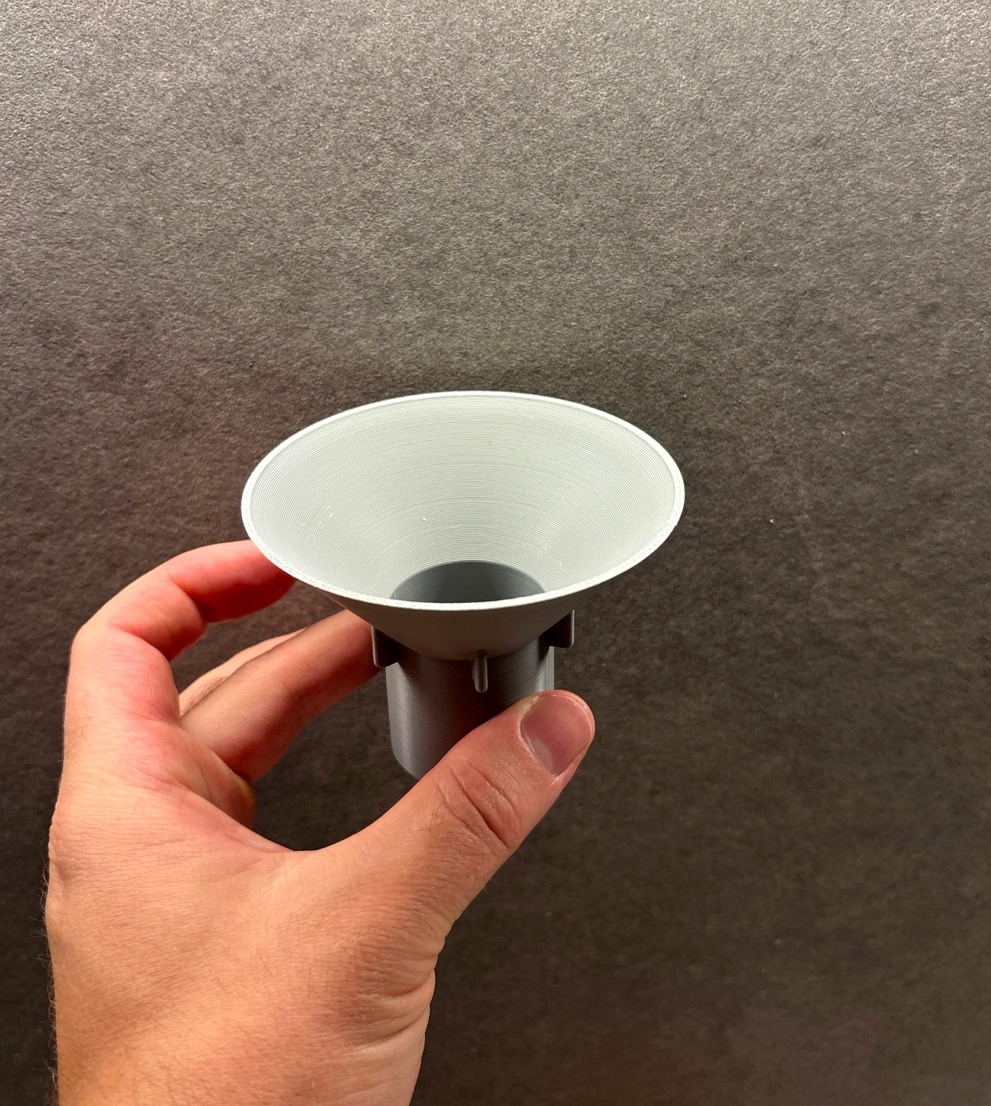
A small printed funnel for refilling dishwasher salt.
Instead of a Conclusion
I used to get a huge amount of enjoyment out of upgrading the printer itself. These days, my priorities have changed a little: I'd rather use it to make things. Sometimes I still get the urge to modify something, but when that happens, I remember what my academic supervisor used to tell me: “Perfection is not when there is nothing left to add, but when there is nothing left to take away.” And although my Ender 3 Pro is already outdated in some respects, I'm quite happy with its current setup, and it covers my basic home-printing needs.